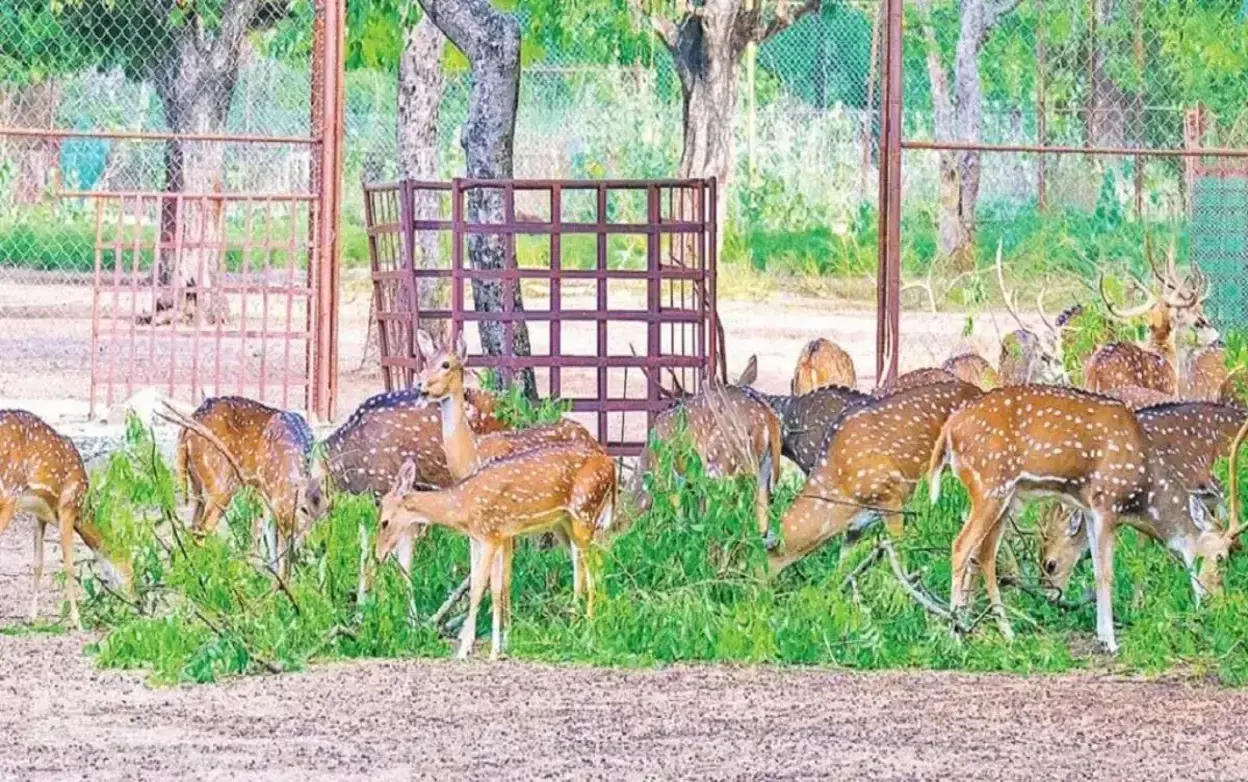
BHEL Township Deer Park
    Park

    BHEL Township Deer Park

    A well-maintained park within the BHEL Township, offering recreational facilities for residents and visitors.

    Share:

    About this Place

    BHEL Township Deer Park - Trichy's Hidden Urban Oasis

    In the heart of Kailasapuram, surrounded by the industrial sprawl of Bharat Heavy Electricals Limited (BHEL), exists an unexpected sanctuary where nature thrives and deer roam freely. The BHEL Township Deer Park represents something rare in industrial India—a consciously maintained green space where workers, families, and wildlife coexist harmoniously. This isn't a grand tourist attraction featured in glossy travel magazines; it's something perhaps more valuable—a beloved local retreat that reveals a different side of Trichy, where industrial development and environmental consciousness successfully share the same address.

    The BHEL Township Story - Green Vision in Industrial Landscape

    BHEL, one of India's largest engineering and manufacturing companies, established its Tiruchirappalli unit in the 1960s as part of India's industrial development push. But BHEL's planners understood something crucial: productive workers need green spaces for mental and physical well-being. The township design intentionally incorporated parks, recreational areas, and this deer park—creating what urban planners today call "green infrastructure" decades before the term became trendy.

    What makes this vision particularly impressive is its sustainability. The deer park hasn't just survived—it's thrived across multiple decades, adapting and improving while maintaining its core purpose. In an era when many companies view environmental initiatives as expensive obligations, BHEL's long-term commitment to this green space demonstrates that industrial success and ecological mindfulness aren't mutually exclusive.

    Meet the Residents - Deer, Peacocks, and Feathered Friends

    The park's star attractions are its deer population—gentle spotted deer that have become remarkably comfortable around human visitors. Watch a deer family grazing peacefully near walking paths while morning joggers pass by, and you're witnessing successful human-wildlife coexistence. The deer aren't caged or confined; they roam freely within the park's boundaries, creating encounters that feel spontaneous and natural rather than zoo-like.

    Peacocks add dramatic visual flair, their iridescent blue-green plumage catching sunlight as they strut through the park with regal confidence. During mating season, male peacocks display their magnificent tail feathers in elaborate courtship dances—free nature shows that no amount of money could improve upon. Various bird species have also made the park their home, from common mynas and crows to more exotic visitors during migration seasons, making this a modest but genuine bird-watching opportunity in the middle of an industrial township.

    The Green Lung of Kailasapuram - Environmental Importance

    In areas dominated by industrial facilities, green spaces serve crucial ecological functions beyond recreation. The BHEL Deer Park acts as a "green lung," with its trees and vegetation helping filter air pollutants and providing oxygen. The park's plants absorb carbon dioxide and various industrial emissions, creating a localized air quality buffer that benefits both BHEL township residents and surrounding neighborhoods.

    The park also contributes to groundwater recharge, with its unpaved areas allowing rainwater to percolate into underground aquifers rather than running off as it would from concrete surfaces. These environmental services—air filtration, groundwater recharge, temperature moderation—might be invisible to casual visitors, but they represent significant ecological value that justifies the park's maintenance costs many times over.

    Morning Walker's Paradise - Dawn Rituals and Daily Routines

    Visit the BHEL Deer Park early morning, and you'll encounter a community of regular visitors whose daily routines revolve around this green space. Morning walkers arrive as early as 5:00 AM, using the park's paths for exercise while enjoying the relatively cool morning air and bird songs that signal the day's beginning. There's something therapeutic about walking paths surrounded by trees, watching deer emerge from their resting spots, seeing the park transition from night to day.

    These regular visitors have formed informal communities—groups of retirees who walk together daily, sharing conversation and companionship; fitness enthusiasts who use the park for jogging and yoga; nature photography hobbyists who know exactly where and when to find the best subjects. The park serves as social infrastructure, facilitating human connections alongside its ecological functions.

    Family Recreation Facilities - More Than Just Wildlife

    The park offers diverse recreational facilities making it genuinely family-friendly. A children's play area with swings, slides, and other equipment provides safe outdoor entertainment for kids—increasingly valuable in an era when children spend concerning amounts of time on screens rather than playing outdoors. Parents can supervise children while relaxing on benches, enjoying the rare luxury of not being constantly vigilant about traffic or other urban dangers.

    Well-maintained walking paths make the park accessible for visitors across age ranges and physical abilities. Elderly individuals who might struggle with uneven terrain can walk comfortably here, while the shaded areas provide respite from Tamil Nadu's intense sun. Seating areas scattered throughout allow for rest stops and contemplation, making the park as suitable for quiet reflection as for active recreation.

    The Perfect Evening Escape - After Work Relaxation

    As evening approaches, the park undergoes another transformation. BHEL employees finishing their shifts stop by for stress relief before heading home. There's something deeply restorative about transitioning from industrial workspace to natural environment—the psychological shift from work mode to personal time becomes easier when mediated by green space and wildlife encounters rather than immediate immersion back into domestic responsibilities.

    Families arrive in the late afternoon, with parents bringing children for outdoor play that has become increasingly rare in urban Indian settings. The sight of kids running around, playing traditional games, interacting with nature rather than screens—it represents a counter-current to broader societal trends, making the park's value extend beyond simple recreation into cultural preservation of outdoor childhood experiences.

    Deer Feeding Experience - Guidelines and Ethics

    Many visitors want to feed the deer, and the park allows this within guidelines designed to protect both visitors and animals. Designated feeding times and approved food items ensure the deer maintain healthy diets rather than becoming dependent on unhealthy human food offerings. This managed interaction creates memorable experiences—especially for children who've never had close wildlife encounters—while maintaining animal welfare standards.

    The deer have learned these patterns, approaching feeding areas during appropriate times while maintaining healthy caution. This balance—comfortable enough around humans for close encounters but not so domesticated as to lose natural behaviors—demonstrates thoughtful wildlife management that respects both human desires for interaction and animal welfare requirements.

    Photography Opportunities - Capturing Nature in Industrial Setting

    For photography enthusiasts, BHEL Deer Park presents interesting creative challenges. How do you capture compelling wildlife images when industrial structures sometimes appear in backgrounds? The answer lies in selective framing and understanding that the juxtaposition itself tells a story—nature persisting despite human industrial activity, rather than nature existing in pristine isolation.

    Early morning and late afternoon provide the best natural lighting for photography. The golden hour light filtering through trees, illuminating deer and peacocks, creates images with professional-quality lighting. Patient photographers can capture remarkable wildlife behavior shots—deer families interacting, peacocks displaying, birds engaged in nesting activities—all within walking distance of one of India's major industrial facilities.

    Seasonal Variations - How the Park Changes Through the Year

    The park's character shifts with seasons, providing different experiences depending on visit timing. Post-monsoon months (October through January) see the park at its greenest, with vegetation lush and vibrant after rains. Flowering plants bloom in succession, attracting butterflies and adding color to the landscape. These months offer the most comfortable weather for extended park visits.

    Summer months (March through June) bring challenges—intense heat that makes midday visits uncomfortable. However, early morning and evening hours remain pleasant, and summer sees increased peacock mating displays as the breeding season coincides with hot weather. The deer seek shaded areas during peak heat, creating photogenic tableaus of animals clustered under trees.

    Community Events and Cultural Programs

    The park serves as a venue for BHEL township community events—annual celebrations, cultural programs, children's competitions, and environmental awareness campaigns. These events strengthen community bonds, particularly important in township settings where residents often come from diverse geographic and cultural backgrounds. The park becomes neutral gathering ground where shared appreciation for green space transcends other differences.

    Environmental education programs for schools sometimes use the park as outdoor classroom, teaching children about ecology, wildlife conservation, and human responsibility toward nature. These educational applications extend the park's value beyond immediate recreation into long-term environmental consciousness development for younger generations.

    Nearby Attractions and Combined Visit Options

    While visiting BHEL Deer Park, consider exploring nearby attractions within the township. The BHEL temple complex, though primarily serving township residents, welcomes visitors and offers insight into corporate-supported religious facilities. The township's layout itself interests urban planning enthusiasts, representing mid-20th-century Indian industrial township design principles.

    The park's location in Kailasapuram places it within reasonable distance of central Trichy attractions. Visitors could combine a morning visit to major temples like Rockfort or Srirangam with an afternoon stop at the deer park, experiencing both Trichy's historical-religious heritage and its modern industrial-environmental achievements in a single day.

    Practical Information for Visitors

    The BHEL Township Deer Park opens at 5:00 AM and closes at 8:00 PM, accommodating both early morning visitors and those preferring evening visits. Entry fees are modest—₹10 for adults and ₹5 for children—keeping the park accessible while generating revenue for maintenance. These low fees reflect the park's community service orientation rather than profit-seeking commercial tourism.

    The park provides basic amenities including clean restrooms and drinking water facilities. Parking areas accommodate both two-wheelers and cars, though weekends can see parking fill up during peak hours. Security personnel maintain order and ensure visitors follow rules regarding wildlife interaction and park cleanliness.

    Why Locals Love This Park - Testimonials and Perspectives

    Ask BHEL township residents about the deer park, and you'll hear genuine affection. For many, it's been part of their daily lives for years or even decades—the place where they take morning walks, where their children played growing up, where they've celebrated personal milestones. This long-term relationship between community and green space demonstrates successful urban planning that prioritizes human well-being alongside industrial productivity.

    Visitors from outside the township often express surprise: "I didn't know places like this existed in industrial areas." That surprise itself reveals assumptions about industry and nature being incompatible. BHEL Deer Park challenges those assumptions, proving that with commitment and resources, green spaces can thrive even in heavily developed areas.

    An Underrated Trichy Gem Worth Discovering

    The BHEL Township Deer Park won't appear on most tourist itineraries, and that's partly what makes it special. This is authentic local Trichy—not curated for tourists but genuinely serving community needs. Visitors who discover it experience something most travelers miss: everyday life in industrial India that includes environmental consciousness and quality green space.

    In a rapidly urbanizing India where green spaces increasingly give way to development pressures, parks like this demonstrate alternative possibilities. They show that industrial areas don't have to be environmental wastelands, that corporate entities can maintain long-term ecological commitments, and that urban wildlife and human communities can coexist beneficially. The deer browsing peacefully while people walk past on morning exercise routines—that simple scene contains hopeful messages about possible futures where development and nature find balance rather than conflict.

    Photo Gallery

    BHEL Township Deer Park - view 1

    Visitor Information

    Opening Hours

    5:00 AM - 8:00 PM, Daily

    Entry Fee

    Rs.10 for Adult, Rs.5 for Children

    Location

    Kailasapuram, Trichy, Tamil Nadu, India

    Contact

    +91 431-257-7456