Exploring Kallanai and Its History
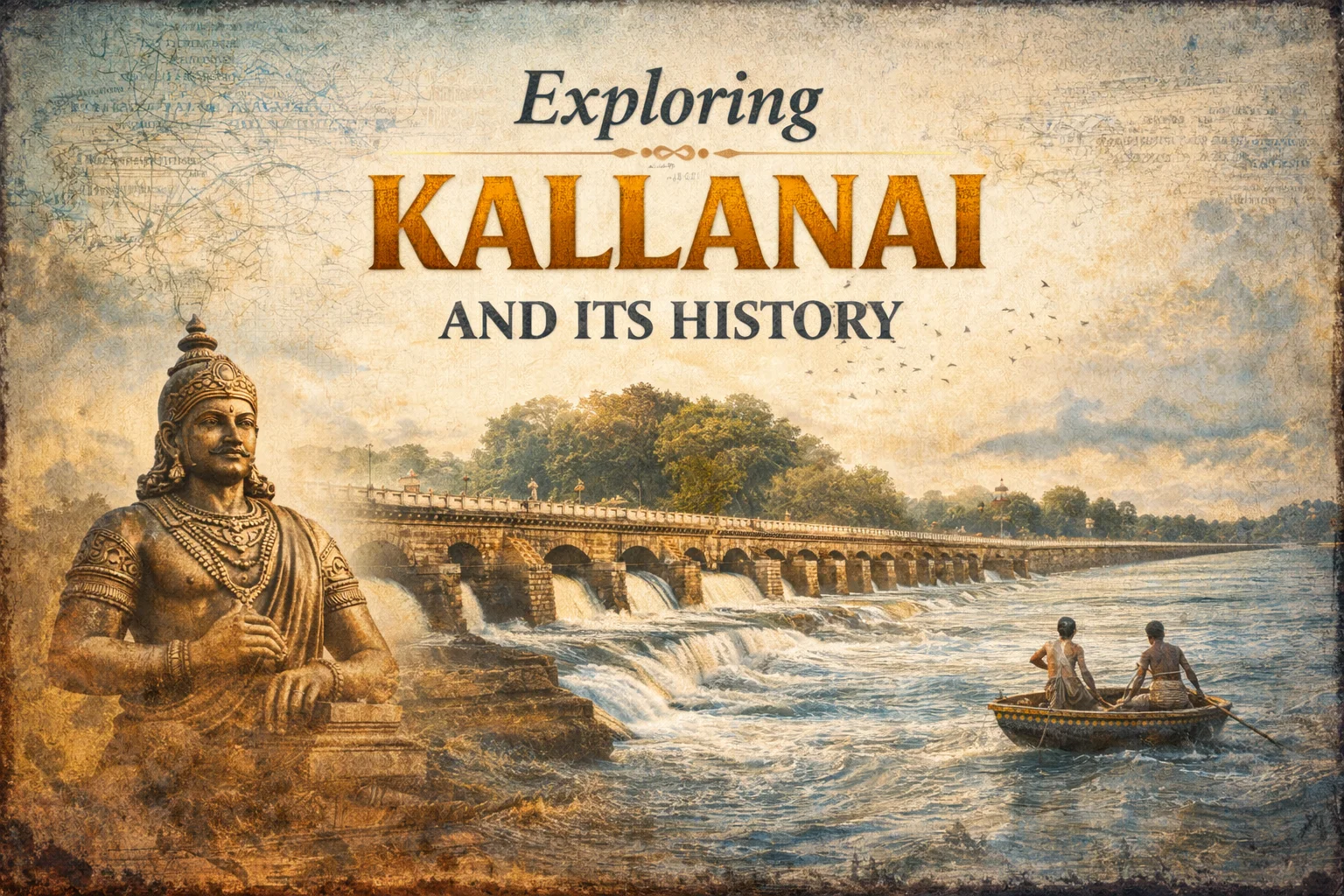
Exploring Kallanai and Its History: The Legacy of the Grand Anicut
Spanning the mighty Kaveri (Cauvery) River just outside the city of Tiruchirappalli stands Kallanai, widely celebrated as the Grand Anicut. While modern concrete dams are typically engineered with a lifespan of about a century, this ancient water-diversion structure has been continuously operating for nearly 2,000 years. It is a profound testament to ancient Tamil hydrodynamic engineering and remains one of the oldest functioning water-regulation structures on the planet.
Exploring Kallanai is not just about enjoying a scenic riverwalk; it is about stepping onto a living, breathing piece of ancient infrastructure that transformed the barren lands of the Thanjavur delta into the "Rice Bowl of South India."
The Chola Genesis: 2nd Century AD
The history of Kallanai begins around 150 AD under the visionary leadership of the great Early Chola king, Karikala Chola. Facing devastating seasonal floods that would wash away crops, followed by severe droughts, the king commissioned a massive barrier to tame the Kaveri.
The engineering challenge was immense: how do you build a massive dam on a shifting, sandy riverbed without modern cement or heavy machinery? The ancient Tamil engineers devised a brilliant solution. They rolled massive, unhewn boulders into the riverbed. As the water scoured the sand from beneath the boulders, they naturally sank to a solid foundation. Another layer of boulders was then placed on top, interlocking perfectly. Over time, this formed a solid, unyielding barrier 329 meters long, 20 meters wide, and 5.4 meters high.
Colonial Intervention: Sir Arthur Cotton
Fast forward to the 19th century. The British East India Company took control of the region, but the irrigation systems of the delta had fallen into severe disrepair, leading to famine. In 1839, the British military engineer Captain (later General) Sir Arthur Cotton was dispatched to study the Kaveri river system.
Cotton was astounded by the ancient Chola foundation of Kallanai. Upon studying the submerged boulders, he realized the sheer genius of the original design. Instead of tearing it down, Cotton reinforced the structure and raised the dam's height to increase its water capacity. He was so inspired by Karikala Chola's engineering that he used the exact same foundational principles to build the Upper Anicut (Mukkombu) upstream and later the massive Dowleswaram Barrage in Andhra Pradesh. Cotton famously credited the ancient Tamil engineers as his greatest teachers.
The Experience: Exploring the Dam Today
Today, Kallanai serves as a bustling, breezy hub of local tourism and history.
- The River Split: Standing on the modern road bridge that runs parallel to the ancient stones, you can watch the monumental splitting of the river. Kallanai divides the Kaveri into four distinct streams: the Kollidam, Kaveri, Vennaru, and Puthu Aru. This is the exact point where the river transforms into a sprawling delta network.
- Karikala Chola Memorial: At the edge of the dam sits a magnificent memorial dedicated to King Karikala Chola. The memorial features a bronze statue of the king atop a royal elephant, acknowledging his role in securing the agricultural wealth of Tamil Nadu.
- The Park and Riverside: The surrounding area has been developed into a beautifully landscaped park, making it a highly popular spot for families, photographers, and history enthusiasts to relax by the rushing waters.
Frequently Asked Questions (FAQ)
How does Kallanai work without modern cement?
The dam relies on gravity, weight, and the natural interlocking of giant unhewn stones. The foundational boulders were sunk deep into the sand, and subsequent layers were fitted together using a traditional, ancient mortar paste made of limestone and unique natural binding agents, which has hardened over centuries.
How far is Kallanai from Trichy?
Kallanai is located approximately 15 kilometers (about 9 miles) from the center of Tiruchirappalli (Trichy). It takes roughly 30 to 40 minutes to reach by car or auto-rickshaw.
What is the difference between Kallanai and Mukkombu?
Kallanai (Grand Anicut) is the original, 2,000-year-old dam built by the Cholas, located downstream from Trichy. Mukkombu (Upper Anicut) is a 19th-century dam built upstream from Trichy by the British, specifically inspired by Kallanai's design to control floodwaters before they reach the city of Srirangam.
Is it worth visiting for history buffs?
Absolutely. For those interested in ancient infrastructure, hydro-engineering, and the history of the Chola Empire, it is an essential pilgrimage. Standing on a dam that has been actively managing a major river for two millennia is an unparalleled historical experience.
For more historical context and regional travel updates, visit the Official Tiruchirappalli District Portal.
 Translate