The History of Tiruchirappalli
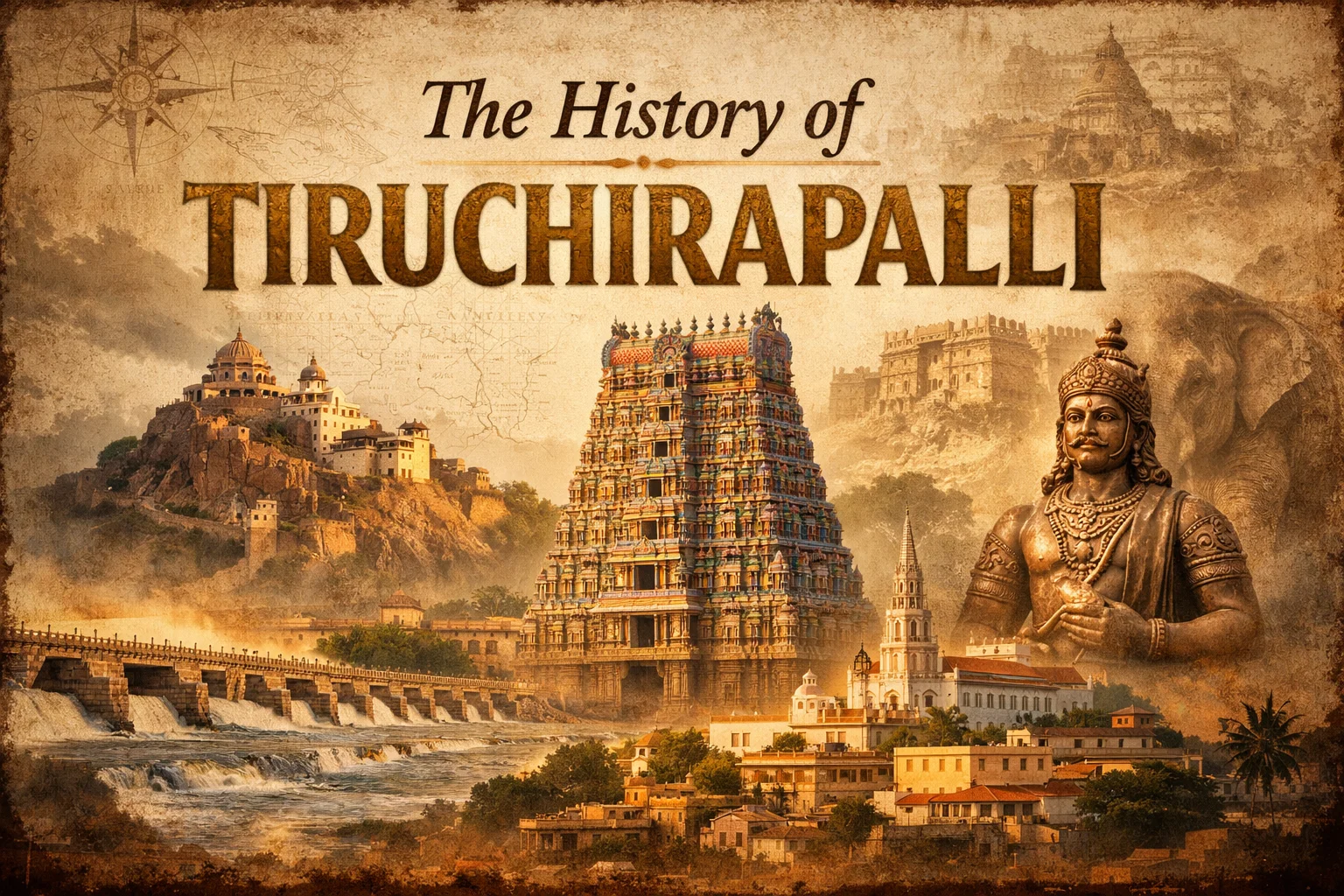
The History of Tiruchirappalli: A Journey Through Time in South India
For the American traveler exploring Tamil Nadu, Tiruchirappalli—affectionately known as Trichy—is not just a transit hub; it is a living, breathing history book. Situated on the fertile banks of the Kaveri River, this city has been fought over for more than two millennia. From ancient Tamil dynasties and powerful regional empires to the clashing colonial ambitions of the French and the British, Trichy has seen it all. Its history is quite literally carved into the rock and woven into the massive temple complexes that dominate its skyline.
Understanding the history of Trichy is essential to understanding the history of South India itself. It is a tale of trade, devotion, military strategy, and architectural genius that stretches back to the 3rd century BCE.
Ancient Roots: The Early Cholas (300 BCE – 1200 CE)
Trichy's earliest recorded history places it at the absolute center of the ancient Tamil world. The modern-day neighborhood of Woraiyur (Uraiyur) was actually the capital of the Early Cholas. During this era, Trichy was a massive, prosperous hub for the global spice and textile trade, even finding its way into the writings of the Greek astronomer Ptolemy in the 2nd century.
It was during this period that the visionary Chola king, Karikala, built the Kallanai Dam (Grand Anicut) just outside the city. Remarkably, this 2,000-year-old water diversion structure is still in use today, standing as a testament to the advanced engineering of the ancient Tamil people.
The Golden Age of the Nayaks (16th – 17th Century)
After changing hands between the Pallavas, the Medieval Cholas, and the Delhi Sultanate, the city fell under the control of the Vijayanagara Empire, and eventually, the Madurai Nayaks. For the modern tourist, the Nayak era is perhaps the most visible.
- The Rockfort: The Nayaks recognized the immense strategic value of the massive 3.8-billion-year-old rock in the center of the city. They heavily fortified it, turning it into an impregnable military base and expanding the Uchhi Pillayar and Thayumanavaswamy temples on its slopes.
- Srirangam Expansion: The Nayaks were also prolific patrons of the arts and religion, contributing massively to the expansion of the Sri Ranganathaswamy Temple complex in nearby Srirangam, adding intricately carved mandapams (pillared halls) and towering gateways.
The Carnatic Wars: The British vs. The French (18th Century)
For American history buffs, this is where Trichy's timeline intersects with the global colonial conflicts that eventually shaped the United States. In the mid-1700s, during the Carnatic Wars, Trichy became the epicenter of a massive proxy war between the British East India Company and the French East India Company.
The famed 'Siege of Trichinopoly' saw British forces, heavily supported by local allies, defend the Rockfort against French-backed troops. This era launched the career of Robert Clive ('Clive of India') and cemented British dominance in South India, paving the way for the eventual establishment of the British Raj.
The British Raj and Modern Trichy (19th – 20th Century)
Under British rule, the city was anglicized to 'Trichinopoly'. The British transformed it into a massive educational and administrative hub. They established St. Joseph's College (one of the oldest colleges in India) and made Trichy the headquarters of the South Indian Railway Company. Today, you can still see the heavy colonial influence in the gothic architecture of local churches and the vintage locomotives at the Railway Heritage Centre.
Frequently Asked Questions (FAQ)
Why does the city have two names (Tiruchirappalli and Trichy)?
Tiruchirappalli is the official, ancient Tamil name. 'Trichy' is simply the shortened, anglicized version that became popular during British rule and remains the most common way locals and tourists refer to the city today.
What is the oldest surviving structure in Trichy?
While the Rockfort rock itself is billions of years old, the Kallanai Dam (built around 150 AD by the Cholas) is the oldest functioning man-made structure in the region. There are also rock-cut cave temples within the Rockfort dating back to the Pallava era (around 580 AD).
Is Trichy a good base for historical sightseeing?
Absolutely. Trichy is geographically central in Tamil Nadu. It is an incredibly strategic base for exploring not only its own deep history but also taking day trips to the Great Living Chola Temples in Thanjavur and the opulent mansions of the Chettinad region.
How long should I spend exploring its history?
To truly appreciate the Rockfort, the massive complex of Srirangam, Jambukeswarar Temple, and colonial sites like the Railway Heritage Centre or Our Lady of Lourdes Church, you should allocate at least two to three full days.
To dive deeper into the heritage and plan your historical walking tours, visit the Official Tiruchirappalli District History Portal.
 Translate