Arulmigu Jambukeswarar Akilandeswari Temple
An ancient temple dedicated to Lord Shiva and Goddess Parvati, representing the element of water.
About this Place
Arulmigu Jambukeswarar Akilandeswari Temple: The Submerged Sanctum of Shiva
Just a stone's throw away from the colossal Srirangam temple in Trichy lies a quieter, more mystical sanctuary: the Arulmigu Jambukeswarar Akilandeswari Temple. Built around the 2nd century AD by the early Cholas, this sprawling complex is a masterclass in Dravidian architecture. But for the American traveler seeking the deeply esoteric side of India, its true draw isn't just stone—it is water.
This temple is one of the revered Pancha Bhoota Stalams in South India—five ancient Shiva temples that each represent an element of nature (Earth, Water, Fire, Air, and Space). Jambukeswarar represents Water (Appu Lingam). It is a place dripping with ancient mythology, incredible stonemasonry, and rituals that have remained unchanged for over a thousand years.
The Mystery of the Submerged Shrine
The most fascinating aspect of this temple defies logic. The main deity, a Shiva Lingam, is situated in the innermost sanctum sanctorum. Beneath this Lingam is a perennial underground natural spring. Regardless of how severe the summer droughts get in Tamil Nadu, water continuously bubbles up from the ground, keeping the sanctum partially submerged year-round. Watching the priests wade through the water to perform their rituals is a surreal, deeply spiritual sight.
The Legend of the Elephant and the Spider
The town's name, Thiruvanaikaval, translates to "The forest of the holy elephant." According to Hindu mythology, a spider and an elephant both worshiped the Shiva Lingam here. The spider would spin webs over the deity to protect it from falling leaves, but the elephant, thinking the webs were dirty, would wash them away with river water. This led to a fierce battle where both perished. Shiva, moved by their devotion, granted them both liberation. As a nod to the spider, the inner enclosures of the temple are built so low and narrow that an elephant could never enter them.
A Unique Gender-Bending Ritual
If you visit around noon, you will witness one of the most unique rituals in all of India. According to legend, Goddess Akilandeswari worshipped Lord Shiva here. To recreate this devotion, the head priest dresses entirely as a woman—wearing a saree and a crown—to perform the midday pooja (prayer) to Lord Shiva. It is a beautiful, deeply symbolic display of the divine feminine and masculine energies balancing each other.
Practical 'Know Before You Go' for US Travelers
- The Barefoot Rule: You must leave your shoes at the entrance. The temple is massive (covering 18 acres), and you will be doing a lot of walking on stone. Visit early in the morning or late afternoon to avoid burning your feet on sun-baked stones.
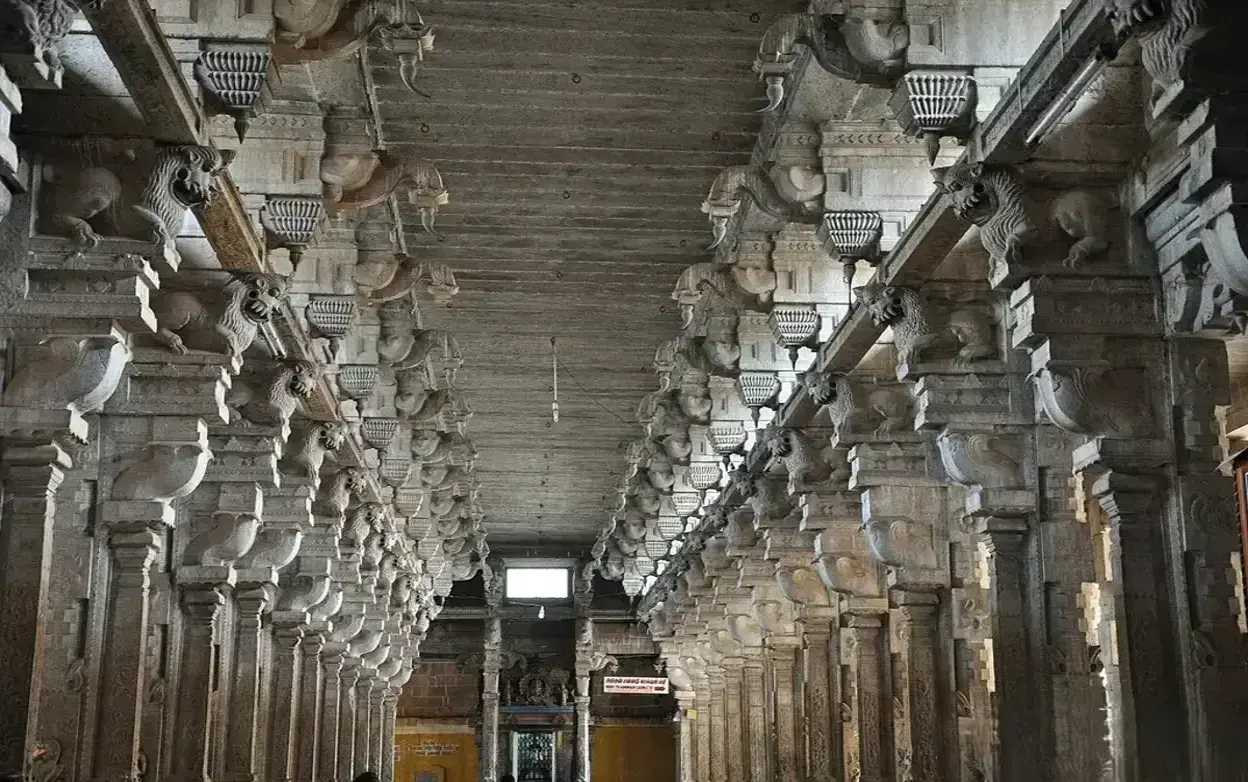
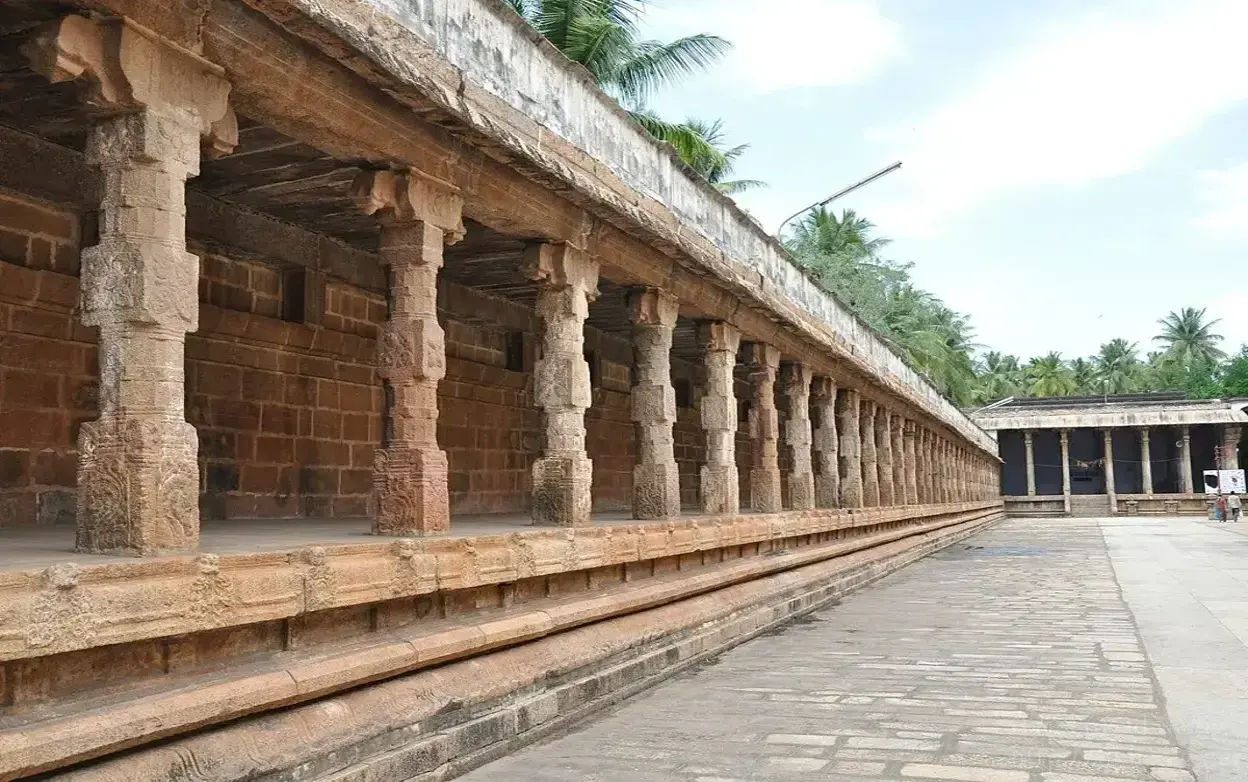
- Architecture to Spot: Don't miss the 1,000-pillar hall and the intricate carvings of the outer corridors. The monolithic stone pillars here rival those in the more famous Madurai Meenakshi Temple.
- Dress Code: Traditional Indian wear is highly recommended. Men must wear long pants (or a traditional dhoti) and women must cover their shoulders and knees. Tight leggings or shorts are not permitted.
Frequently Asked Questions (FAQ)
Can non-Hindus enter the Jambukeswarar Temple?
Yes, non-Hindus are welcome to explore the magnificent outer courtyards (prakarams), marvel at the architecture, and observe the rituals from a distance. However, access to the innermost sanctum (the Garbhagriha) where the water-submerged Lingam sits is strictly reserved for practicing Hindus.
How far is it from the Srirangam Temple?
It is incredibly close! The Jambukeswarar Temple is located just 2 kilometers (about 1.2 miles) from the Sri Ranganathaswamy Temple in Srirangam. You can easily visit both monumental temples in a single day trip.
How much time should I spend there?
Plan for about 1.5 to 2 hours. The temple complex is vast, with five concentric walls. You will want time to admire the carvings, watch the rituals, and soak in the meditative atmosphere without rushing.
Are cameras allowed inside?
Photography is generally allowed in the outer corridors and courtyards for a small fee. However, taking photos or videos of the inner sanctums and the deities is strictly prohibited. Always look for signage or ask a guard before snapping pictures.
To plan your visit and learn more about Tamil Nadu's ancient heritage, visit the Official Tiruchirappalli District Portal.
Photo Gallery
Visitor Information
Opening Hours
5:30 AM - 1:00 PM, 3:00 PM - 8:30 PM, Daily
Entry Fee
Free
Location
Thiruvanaikaval, Tiruchirappalli, Tamil Nadu, India
Contact
+91 431-223-0257
Related Articles & Guides
Famous Temples Around Trichy
Explore the magnificent temples that make Trichy a spiritual destination for millions of devotees.
Exploring Rockfort Temple and Its History
Journey to the top of Trichy's iconic Rock Fort and discover its fascinating history and spiritual significance.
Frequently Asked Questions
Everything you need to know about visiting Arulmigu Jambukeswarar Akilandeswari Temple